
How to Check the Value of Old Coins: A Practical, Step-by-Step Guide
Finding an old coin in a drawer can feel like discovering a tiny, silent time capsule. Maybe it’s a tarnished silver dollar, maybe a copper penny with a strange date, or a gold free coin scan app whose heft surprises you. Before you get swept away by dreams of sudden fortune, take a slow, steady approach. Coins have two kinds of value: melt value (what the metal is worth) and numismatic value (what collectors will pay). This article walks you through how to identify, assess, authenticate, and — if you choose — sell old coins, using simple tools and reliable sources.
Why a careful check matters
Countless factors change a coin’s worth: date and mint mark, rarity, condition, historical significance, and even market trends. Two identical-looking coins can be worth very different amounts if one has a subtle mint error or if one was cleaned improperly. Rushing to sell without examining these details risks leaving money on the table or accepting counterfeits. A careful check helps you separate common, low-value pieces from genuinely valuable finds and makes every decision — whether to hold, grade, or sell — more informed.
Tools you’ll want to have on hand
Good tools don’t need to be expensive. They simply let you see, measure, and document what’s in front of you.
- 10x loupe or jeweler’s magnifier — essential for spotting mint marks, die errors, and surface details.
- Digital scale (grams) — useful for checking precious metal content and screening counterfeits.
- Digital calipers — measure diameter and thickness to confirm a coin’s specifications.
- Soft cotton gloves or finger cots — to avoid oils and scratches from handling.
- Good light source — daylight-balanced lamp or bright LED to reveal luster and wear.
- Camera or smartphone — take clear photos of both sides for research or professional opinions.
- Reference books or internet access — for price guides, auction results, and databases.
Step-by-step: How to check an old coin’s value
Approach every coin in the same calm sequence. Don’t clean or polish anything — that can reduce value irreversibly. Instead, document and examine.
- Initial identification.Read the date, denomination, and any mint marks. Mint marks are small letters indicating where a coin was struck (examples: P, D, S for many U.S. coins). Note country of origin and design features. If the date is worn away, compare size and imagery to known types to narrow the match.
- Check metal composition and weight.Weigh the coin and measure diameter. Compare with standard specifications (many references list these). A large deviation can indicate a counterfeit, a modern replica, or a coin that’s been altered. For precious-metal coins, melt value gives a baseline price: multiply weight by current metal spot price, but remember that numismatic value often exceeds melt value.
- Assess condition (grading).Condition is often the single biggest factor in price. Use a 10x loupe and good light. Look at high points for wear, check for scratches, hairlines, corrosion, or cleaning marks. Note luster and strike quality. Don’t try to assign a numeric grade unless you know the system; instead, use descriptive grades (Good, Fine, Extremely Fine, About Uncirculated, Mint State) as a first pass.
- Look for rarity and varieties.Consult guides to see mintage numbers and known varieties — double dies, repunched mint marks, or small mint-run issues can greatly increase value. Also check for key dates in the series (those with low mintage or historic anomalies).
- Scan for errors and provenance.Errors like off-center strikes, clipped planchets, or double die obverses are collectible. Provenance — a documented history of previous owners or prior auction records — can add value for very rare coins.
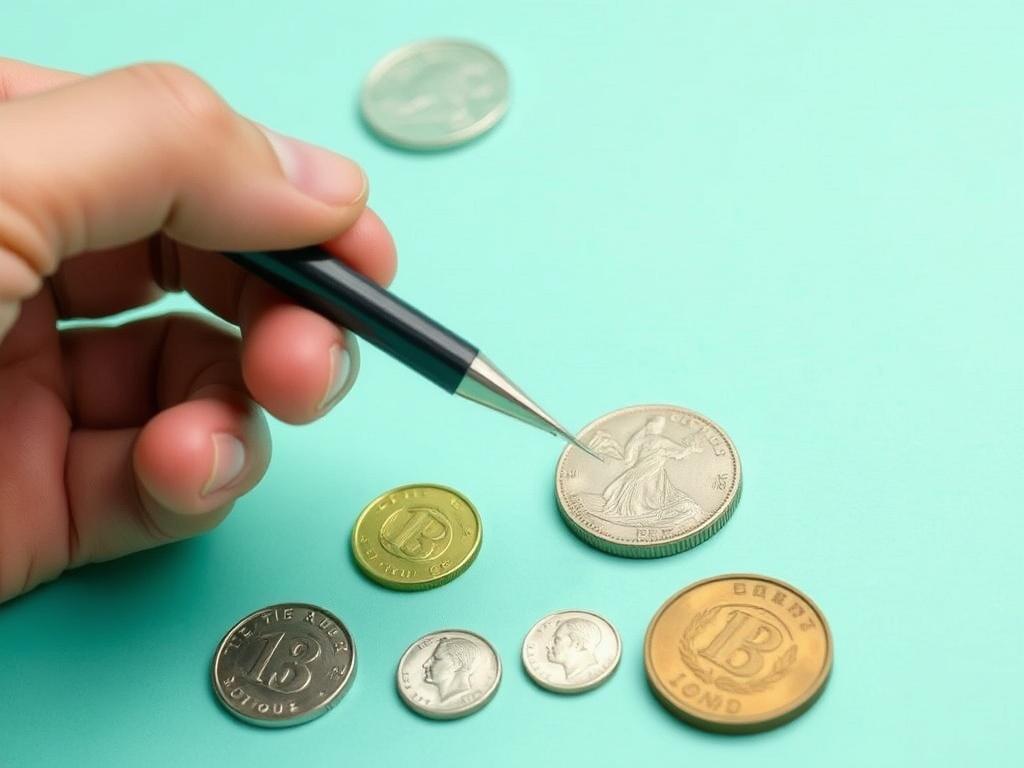
- Cross-check market prices.Look up recent auction results and price guides. Compare “book” prices (like those in printed guides) with realized auction prices and online sold listings, since actual sales best reflect current market demand.
- Decide on next steps: conserve, grade, or sell.If the coin looks valuable, consider professional grading. If it’s common and low-value, store it properly for later. If you plan to sell, gather clear photos, provenance, and condition notes to show buyers.
Quick reference table: Common grading cues
| Grade (descriptive) | What to look for | Typical indicators |
|---|---|---|
| Good (G) | Heavily worn | Major design elements visible but flat; date usually readable |
| Fine (F) | Moderate wear | Design clear but worn; rims intact |
| Extremely Fine (XF) | Light wear | Most details sharp; some luster may remain |
| About Uncirculated (AU) | Very slight wear | Near-full luster on protected areas; slight friction on high points |
| Mint State (MS) | No wear | Full luster; struck on blank planchet; may show handling marks |
Specific tips for spotting valuable or fake pieces
High value often hides in small anomalies: misstruck coins, low-mintage dates, or mintmarks in the wrong place. For counterfeits, watch for odd weight, poor strike, wrong edge type (reeded vs plain), or inconsistent lettering. Modern counterfeiters sometimes add patina to fake age, so clean appearance alone doesn’t confirm authenticity. If a coin’s weight and dimensions match the standard and the strike quality looks correct under magnification, that’s a good sign. When in doubt, seek an expert opinion.
Common collectible errors and what they mean
- Double die: A doubled image from die misalignment; can be highly valuable depending on severity.
- Off-center strike: Part of the design missing due to improper centering; collectible by error specialists.
- Clipped planchet: The blank was clipped before striking; small clips are common and typically modestly priced.
- Die cracks and cuds: Raised lines or blobs on the coin where the die cracked; these can make otherwise ordinary coins interesting to specialists.
When to use professional grading services
Professional grading — by companies like PCGS or NGC — stabilizes value and reassures buyers when dealing with high-value coins. Grading is worth the cost if the coin might be thousands of dollars or if you need market confidence for auction sales. Avoid grading low-value, common coins because fees will exceed potential returns. Before submitting, do your homework: know the service’s submission fees, turnaround time, and the typical premiums paid for slabbed coins in your series.
Combine several resources to form a realistic price idea. Printed price guides (the “Red Book” and specialized catalogs) are useful for context. Online databases like PCGS Coin Price Guide, NGC Price Guide, and auction archives show realized prices. eBay’s completed listings are valuable for current market trends but be careful: descriptions and grades on eBay are sometimes optimistic. For precious metals, check live spot prices. Keep notes of recent sold prices for similar grade and provenance to base expectations on real market behavior.
Best practices for storage and care
Storage protects value. Keep coins in stable, dry conditions away from fluctuating temperatures, humidity, and direct sunlight. Use inert holders: Mylar flips, archival-quality 2×2 holders, or airtight capsules for single coins. Avoid PVC flips — they can leach and damage surfaces. Handle coins by the edges with gloves or finger cots and don’t clean them. Even light scrubbing damages surfaces and reduces value dramatically. For long-term, a safe or safety deposit box is wise for high-value pieces.
Selling: where and how
Choices for selling include local coin dealers, auction houses, online marketplaces, and consignment through specialist dealers. Dealers offer convenience and immediate payment but pay wholesale prices. Auctions and online sales can fetch retail prices but come with fees and the uncertainty of sale. For rare or high-end coins, auction houses and specialist dealers typically bring the best returns. Always get multiple opinions and, where appropriate, authenticated grading before pursuing high-stakes sales.
Valuable habits for every collector
Document discoveries with clear photos and notes. Keep a simple inventory list with date, mint mark, grade estimate, and location found. Track market prices for series you care about. Build a relationship with a reputable dealer or local numismatic club; experienced collectors share invaluable insights. Finally, be patient — coin values ebb and flow with collectors’ tastes and metal markets. A thoughtful, steady approach almost always yields better outcomes than a rushed decision.
Resources: books, sites, and communities
For ongoing learning, rely on established sources: the Guide Book of United States Coins (Red Book), PCGS and NGC websites for grading and price tools, auction houses like Heritage Auctions and Stack’s Bowers for realized prices, and online forums or local numismatic associations for community knowledge. Libraries and university collections can also be surprising goldmines for historical context and catalogs of rare series.
Conclusion
Checking the value of old coins is part detective work, part patient study. Start with careful identification and basic measurements, avoid cleaning, use reliable references to assess condition and rarity, and consult professionals for high-value pieces. With a loupe in one hand and sensible sources in the other, you’ll move from curiosity to clarity — and maybe, once in a while, to a pleasant surprise.

