
Bathhouse Interior: What Material to Choose for the Steam Room?
Designing a steam room is a little like conducting an orchestra where heat, humidity, structure and style must perform in perfect harmony. Choose the wrong materials and the room becomes a maintenance nightmare; choose carefully and you get a durable, beautiful space that feels luxurious and easy to care for. This guide walks you through the practical and aesthetic choices—from walls and ceilings to benches, floors and waterproofing—so you can pick materials that will survive steam, look great, and protect the structure behind them.
Steam Room vs. Sauna: Why the distinction matters
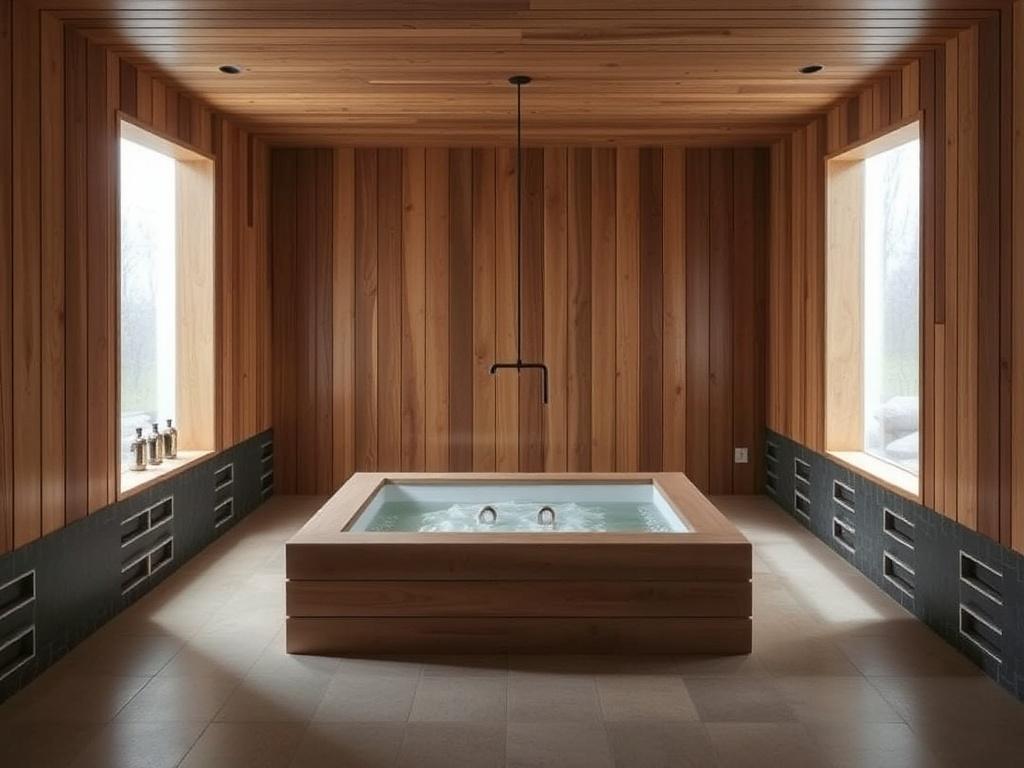
First, make a quick distinction. A sauna is usually a dry-heat environment with temperatures higher than a steam room and much lower humidity. Saunas are friendly to soft, aromatic woods like cedar and hemlock. Steam rooms, on the other hand, operate at near-100% humidity with lower temperatures but constant wetting and condensation. That changes everything: materials that handle dry heat gracefully often fail in persistent moisture. When planning your bathhouse interior, always design as a steam environment—waterproofing and appropriate materials are the priority.
Key challenges a steam room must withstand
Before choosing materials, understand the specific stresses they will face. Steam rooms are aggressive environments: constant condensation, frequent wetting and drying cycles, thermal expansion, occasional chemical exposure from cleaning agents, and the potential for mold and corrosion. Your selections should address all of these at once: resist moisture, avoid rot or delamination, be easy to clean, and remain safe underfoot.
Humidity and condensation
Steam saturates every surface and then condenses as it cools. Porous materials or those lacking a proper barrier will absorb water—leading to rot, structural damage, or mold growth. A continuous, durable vapor barrier and waterproof surfaces are essential.
Thermal and mechanical movement
Materials expand and contract with temperature and moisture. Joints must be designed to accommodate movement. Rigid finishes need flexible connections to avoid cracking or grout failure.
Hygiene and maintenance
Surfaces must tolerate regular cleaning with safe disinfectants and resist staining and odor retention. Materials that hide mold or require specialized cleaning are usually poor choices for a public or frequently used steam room.
Walls and ceilings: what to choose
Walls and ceilings in steam rooms are the first defense against moisture penetration into structure. The ideal surface is waterproof, non-porous, and easy to clean. Several options work well—let’s unpack the most common ones and the trade-offs they present.
Ceramic and porcelain tile
Tiles are the go-to choice for many steam rooms. Glazed porcelain or ceramic tiles are dense, non-porous, and available in many finishes. They’re excellent for walls and ceilings when properly installed over a waterproof backing and membrane.
Pros
- Highly water-resistant and durable.
- Vast design flexibility (color, size, texture).
- Easy to clean; good for hygiene.
Cons
- Grout lines require maintenance; cement grout can stain and harbor mold if not sealed.
- Tile can feel cold to the touch unless heating is provided beneath.
- Improper installation or poor waterproofing leads to leaks and failure.
Natural stone (marble, granite, limestone)
Natural stone gives a luxurious, spa-like finish. When sealed and installed correctly, stone handles steam beautifully. Dark, dense stones such as granite are less absorbent than softer stones like limestone.
Pros
- Timeless aesthetic and high durability.
- Natural variation creates unique looks.
Cons
- Some stones are porous and require regular sealing.
- Cost is higher; weight may require reinforced structure.
- Can be slippery when wet unless textured or honed.
Glass mosaic tiles
Glass mosaics are small tiles bonded to mesh that offer excellent waterproofing when set in the right mortar and grout. Because of their small size, mosaics are ideal for sloped floors and curved benches where a continuous surface is needed.
Pros
- Non-porous and easy to clean.
- Great for complex shapes and precise slopes to drains.
Cons
- Reflective surface can show water spots; requires attention to cleaning.
- Smaller tiles mean more grout lines unless epoxy grout is used.
Prefabricated waterproof panels (Wedi, Schluter, fiberglass reinforced panels)
These systems use foam or composite panels that are inherently waterproof and often come with finished surfaces. They simplify waterproofing and speed installation, especially for ceilings, benches and hallways.
Pros
- Faster installation and reliable waterproofing when used as intended.
- Lightweight compared to stone; easier to build curved forms.
Cons
- Finish options may be more limited unless tiled on top.
- Visible seams or edge details require careful execution for aesthetics.
Floors: slip resistance, drains and slope
Floor material choice is critical for safety and drainage. Floors must be waterproof, slip-resistant when wet, and built with a slope to a properly sized drain. Because standing water is the enemy, the floor assembly and finish should prioritize rapid drainage and durable waterproofing.
Tile floors: quarry tiles and mosaics
Quarry tiles are thick, durable, and often textured for grip; mosaics are excellent for creating the required slope to the drain because of many small tile pieces.
Poured resin or epoxy floors
Seamless resin floors create a continuous, easy-to-clean surface with excellent waterproofing. They can be textured for traction and are used when a smooth, regenerative surface is desired.
Concrete with specialized coatings
Polished or stained concrete can be used, but the surface must be sealed with proper waterproof coatings and textured to avoid slips. Concrete also needs properly detailed slope and joint treatment.
Benches and seating: comfort plus durability
Benches in steam rooms need to be comfortable, drainable and durable. You have a few directions to choose from: tiled benches, wood slatted benches, or stone benches.
Tiled benches
Tiled benches look cohesive with wall finishes and are easy to waterproof. They can be heated from within for added comfort but may feel cool and wet against the skin if heat isn’t included.
Wood benches
Using wood in a steam room is possible but requires careful selection. Dense, oily hardwoods like teak and Ipe resist rot and tolerate moisture cycles better than many softwoods. Thermally modified woods (heat-treated to reduce hygroscopic properties) also perform well. Importantly, wood should be used for seating surfaces rather than structural substrates, and benches should be mounted to allow airflow and drainage.
Tips for wood benches
- Use open slats to allow water runoff and drying.
- Keep fasteners and supports in stainless steel or corrosion-resistant metals.
- Avoid varnish or finishes that trap moisture; prefer natural oils or no finish.
Insulation, vapor barriers and waterproofing membranes
These three elements determine the durability of the entire assembly. In a steam room, you want insulation that won’t degrade with moisture and a continuous vapor barrier on the warm side of the insulation to keep steam out of the walls and structure.
Insulation choices
Closed-cell spray polyurethane foam (SPF) and extruded polystyrene (XPS) board are commonly used. SPF creates an air- and moisture-resistant layer but must be applied by professionals. XPS is moisture-resistant, easy to cut, and commonly used behind cement board and tile assemblies. Mineral wool (rock wool) has excellent thermal properties but is water-absorbent; if used, it should be fully protected by a continuous vapor barrier.
Vapor barriers and steam membranes
A proper steam room needs a continuous vapor barrier on the warm side of the insulation. Traditional polyethylene is sometimes used, but specialized steam membranes (e.g., steam stop or aluminized membranes) are better: they are designed to hold steam pressures and are compatible with tile bonding systems. Liquid-applied waterproofing (e.g., RedGard) or sheet membranes (e.g., Schluter Kerdi) are commonly used on top of cement board or foam panels to create a tile-ready waterproof substrate.
Backer boards and substrate choices
Tiles and stone need a stable substrate. Cement backer board (Cement Board, Fiber Cement) and specialized foam backer panels (Wedi, Schluter) are common. Cement board is durable but heavy and must be fully waterproofed with membranes. Foam boards are lightweight and often inherently waterproof but require proper mechanical attachment and tile adhesive that bonds to foam.
Adhesives, grout and sealants
The choice of adhesive and grout can be just as important as the finish materials themselves. Use thin-set mortars rated for wet environments; many professionals prefer polymer-modified thin-set for tiles. For grout, epoxy grout resists staining and mold far better than cementitious grout and is an excellent choice for steam rooms despite being more expensive and slightly harder to work with.
Sealants and movement joints
All transition points—where tile meets glass, a bench meets a wall, or a drain is installed—require flexible, high-quality silicone or polyurethane sealants rated for constant immersion and high temperatures. Movement joints should be planned in advance to allow for thermal and mechanical movement.
Doors, glass, and hardware
Steam room doors need to seal steam but also open outward for safety. Tempered safety glass is often used for doors and walls, and should be framed or gasketed with materials rated for wet, warm environments. Door hardware must be stainless steel and the door must be fitted so that seals don’t trap water but still reduce steam loss.
Lighting and electrical considerations
Lighting must be rated for wet or immersed locations (IP65 or higher depending on fixture placement) and installed with gaskets and thermal separation from direct steam. Low-voltage LED fixtures are common because they run cool, are energy-efficient, and can be placed behind glass or within niches. All electrical work must adhere to code and should be handled by an electrician experienced with wet environments.
Steam generator location and piping
Position the steam generator where it can vent safely and be accessed for maintenance—often outside the wet room but nearby. Steam lines should be insulated to prevent heat loss; condensate can collect in piping so slope runs and use a drip trap design if needed. Follow manufacturer instructions closely for run lengths and installation details.
Drainage and floor slope
Floor slope to the drain is non-negotiable—aim for approximately 1/4 inch per foot (6 mm per 30 cm) toward the drain. Small mosaic tiles make it easier to achieve that slope and maintain slip resistance. Ensure the drain itself is sized for the expected water volume and is easily accessible for cleaning.
Maintenance: cleaning and long-term care
A well-chosen steam room material palette makes maintenance straightforward. Use non-abrasive cleaners compatible with your tile, stone, or resin finish. Epoxy grout needs less frequent sealing than cement grout. If you choose wood accents, wipe them dry occasionally and keep them ventilated between uses to minimize mold. Regularly inspect seals, grout lines and drains for signs of failure so small issues don’t become big repairs.
Comparative material table
| Component | Material | Pros | Cons |
|---|---|---|---|
| Wall/Ceiling | Porcelain/Ceramic Tile | Durable, waterproof, design flexible | Grout maintenance, cold without heating |
| Wall/Ceiling | Natural Stone | Luxurious, durable | Porous without sealing, heavy, costly |
| Wall/Ceiling | Glass Mosaic | Non-porous, great for curves | Shows water spots, many grout lines |
| Substrate | Foam Backer Panels (Wedi) | Lightweight, waterproof | Finish options limited unless tiled |
| Substrate | Cement Backer Board + Membrane | Robust, tile-ready | Heavy, requires careful waterproofing |
| Floor | Mosaic Tile | Good for slope/drain, slip textures | More grout, needs epoxy grout ideally |
| Bench | Tiled Bench | Durable, cohesive look | Can be cold; heavier |
| Bench | Teak/Wood Slats | Warm, comfortable, water-resistant | Higher cost, needs proper fastening and airflow |
| Waterproofing | Sheet/Liquid Membrane (Kerdi/RedGard) | Reliable system when used correctly | Cost and require professional application |
Common mistakes and how to avoid them
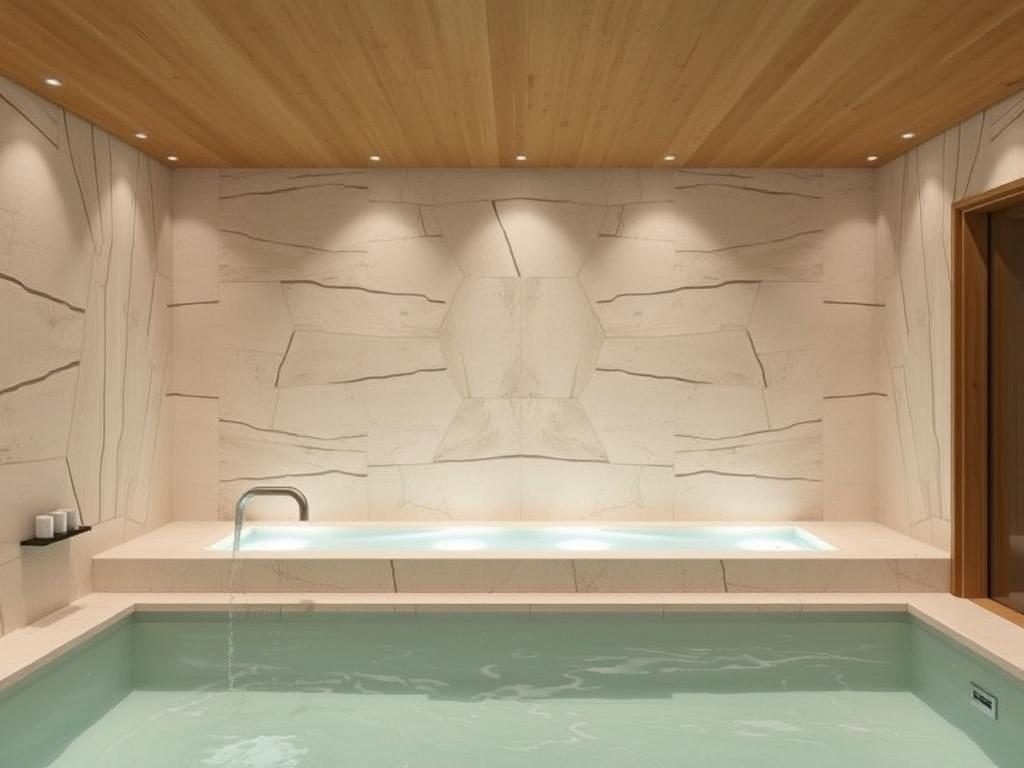
A few recurring errors can shorten the life of a steam room dramatically. Skipping a continuous vapor barrier, using ordinary drywall or softwoods as backing, ignoring expansion joints, relying on standard grout without sealing, and poor door or drain detailing are all frequent culprits. The fix is straightforward: plan waterproofing first, choose materials rated for 100% humidity, and hire installers familiar with steam-room assemblies.
Practical design tips
- Plan bench shapes and drain positions together: benches influence water flow and must not trap moisture.
- Use small tiles on the floor to naturally create the slope to the drain.
- Keep seams and transitions accessible for inspection—hidden failures are harder and more expensive to fix.
- Consider heated benches or floor heating to make tile or stone comfortable to sit on and help surface drying between sessions.
- Choose stainless steel or brass fixtures and hardware to resist corrosion.
Budget and longevity: what to expect
Costs vary widely depending on finish quality, structural needs, and waterproofing choices. A basic steam room with tile and standard waterproofing will be more affordable up front, while stone, custom wood details or advanced membranes raise the price. Factor in lifecycle costs: epoxy grout, professional membranes and stainless hardware add initial expense but reduce repair frequency and extend life. With proper materials and installation, a well-built steam room can last decades; poor detailing can turn it into a multi-year headache in just a few uses.
Step-by-step checklist for building or renovating a steam room
- Decide location, size and layout—ensure access to a drain and steam generator placement.
- Design benches, slopes, door swing (outward), and lighting positions.
- Choose structural supports capable of bearing stone or tile weight if needed.
- Install insulation appropriate for wet conditions (XPS or closed-cell spray foam) and ensure a continuous vapor barrier on the warm side.
- Install backer panels designed for wet locations (cement board with membrane or foam backer panels).
- Apply a waterproofing membrane (sheet or liquid) over the substrate and detail all corners, joints and penetrations.
- Tile or finish surfaces with appropriate adhesives and grout (consider epoxy grout for floors and high-moisture areas).
- Install drains and slope floor to drain—confirm proper drainage performance before finishing.
- Fit door, glass, hardware and sealants with materials rated for wet and thermal cycles.
- Install steam generator, insulate piping and test the system per manufacturer’s instructions.
- Finish with fixtures, lighting, and ventilation; perform a full water/steam test and inspect for leaks.
Designing for the user experience
Beyond technical durability, think about how the room feels to people: seating height, bench depth, step design, acoustics and lighting all shape comfort. Soft indirect lighting and finishes that feel warm to the touch (wood accents or heated surfaces) make the space inviting. For public bathhouses consider material choices that are easy to disinfect and withstand heavy daily use—porcelain, glass mosaics, epoxy grouts and stainless hardware are practical winners.
When to call professionals
Waterproofing, steam generator installation, drainage, electrical work and tile/stone installation in a steam environment require specific know-how. If you’re not experienced with these systems, hire a contractor who specializes in steam rooms or wet-room constructions. Mistakes are costly here; proper installation is worth the upfront investment.
Summary guidance: quick picks for common priorities
- If you want low maintenance and safety: porcelain tile with epoxy grout on a membrane over cement board; mosaic floor for slope.
- If you want luxury and permanence: natural stone with proper sealing, stone thresholds and heated surfaces; be ready for higher cost and maintenance.
- If you want warmth and comfort: combine stone or tile walls with teak or thermally modified wood bench slats mounted over waterproof structure.
- If you prioritize quick build and waterproof reliability: use prefabricated foam panels designed for steam rooms, finished with tile or left as finished panels where appropriate.
Resources and product types to research
Look into waterproofing membranes (sheet and liquid), foam backer boards (brands that specify steam-room use), epoxy grouts, and steam generators rated for the room size. Consult local codes for electrical and plumbing requirements—these govern safe installation and can affect product choices. Manufacturer guidance for tile, adhesives and steam generators is essential—follow their specifications closely for warranties to remain valid.
Final design checklist
- Waterproofing: continuous membrane applied correctly.
- Insulation: moisture-resistant type with vapor barrier placement considered.
- Floor slope: adequate to drain; test before finishing.
- Fixtures/hardware: corrosion-resistant metals and wet-rated finishes.
- Grout/sealants: choose epoxy grout for floors and high-moisture zones; use flexible silicone in movement joints.
- Ventilation and drying: design to minimize residual moisture and prevent mold.
- Professional sign-off: electrician and plumber inspections, and manufacturer commissioning for steam generator.
Case studies in brief
A neighborhood spa replaced failing painted drywall walls with a foam-panel system and tile finish over a Kerdi membrane. The result: no leaks, faster occupant turnaround between uses, and a dramatic drop in maintenance calls. A boutique hotel that insisted on stone walls paired them with heated tile floors and epoxy grout; they invested in a stronger substructure but gained a high-end aesthetic that customers loved and that resisted the heavy daily use. Conversely, a DIY conversion that tiled directly over water-damaged drywall failed within a year—reminding us that substrate and waterproofing choices are non-negotiable.
Wrapping up your choices
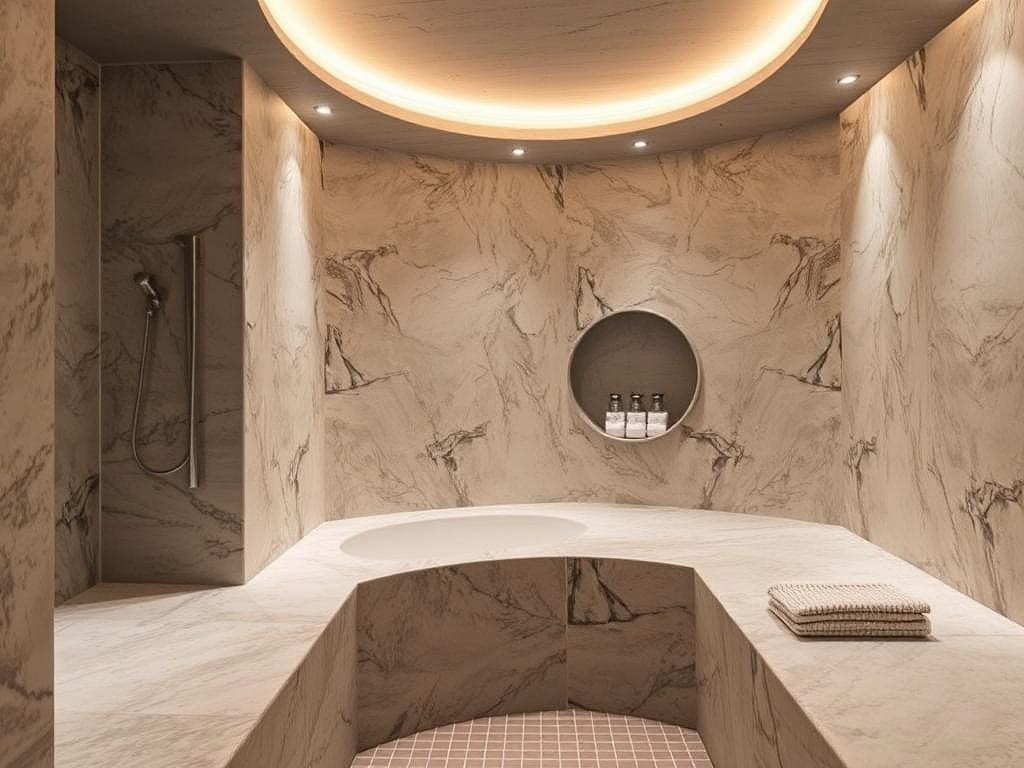
Picking materials for a steam room is a balancing act between durability, maintenance, cost and aesthetic goals. The environmental demands are unforgiving: when designers respect the need for continuous waterproofing, appropriate substrates, sloped drainage and corrosion-resistant fixtures, the result is a steam room that performs for years. Use tiles, stone or engineered waterproof panels for the majority of wet surfaces, reserve wood for seating where it contributes comfort, and never skip professional input for the technical systems (waterproofing, drainage, electrical, and steam generator setup). The result will be a steam room that not only looks inviting but behaves responsibly—protecting the building and delighting its users.
Conclusion
Design a steam room the way you’d build a boat: water encounters everything, so you must plan every joint, surface and material for constant wet conditions. Choose waterproof substrates and membranes, slip-resistant floor finishes, corrosion-resistant hardware, and materials (tile, stone, resin panels or selected woods) that match your desired balance of comfort, maintenance and budget. Proper insulation, continuous vapor barriers, sloped drainage and quality installation make the space durable and hygienic; thoughtful finishes and seating make it pleasurable to use. With careful planning and the right materials, a steam room can be both a practical, long-lived utility and an inviting retreat—one that stands up to steam rather than succumbing to it.

