
Log or Frame: Which Construction Technology to Choose?
Deciding between a log home and a framed home is more than picking a look; it’s a series of trade-offs that affect comfort, cost, maintenance, performance, and even how you feel coming home. Both approaches are mature, proven technologies with decades — even centuries — of real-world testing. Yet they behave very differently in the hands of builders, in different climates, and over different budgets. This article walks through the practical differences, the hidden costs, and the lifestyle implications so you can choose the approach that suits your site, your climate, your budget, and your temperament.
What are we comparing?
Let’s start with plain language. When I say “log construction” I mean walls built from solid wood—whole logs or milled log profiles—that carry structural loads and form the exterior. “Frame construction” refers to stick-built or platform-framed walls where a timber or steel skeleton is sheathed and insulated, with an outer cladding (siding, brick, stone, stucco) doing the weatherproofing. Each system can take many forms—prefabricated log kits, post-and-beam hybrids, platform framing with 2×4 or 2×6 studs, and advanced timber frames with insulated panels—so think in terms of families rather than single recipes.
How they work: structure, envelope, and insulation
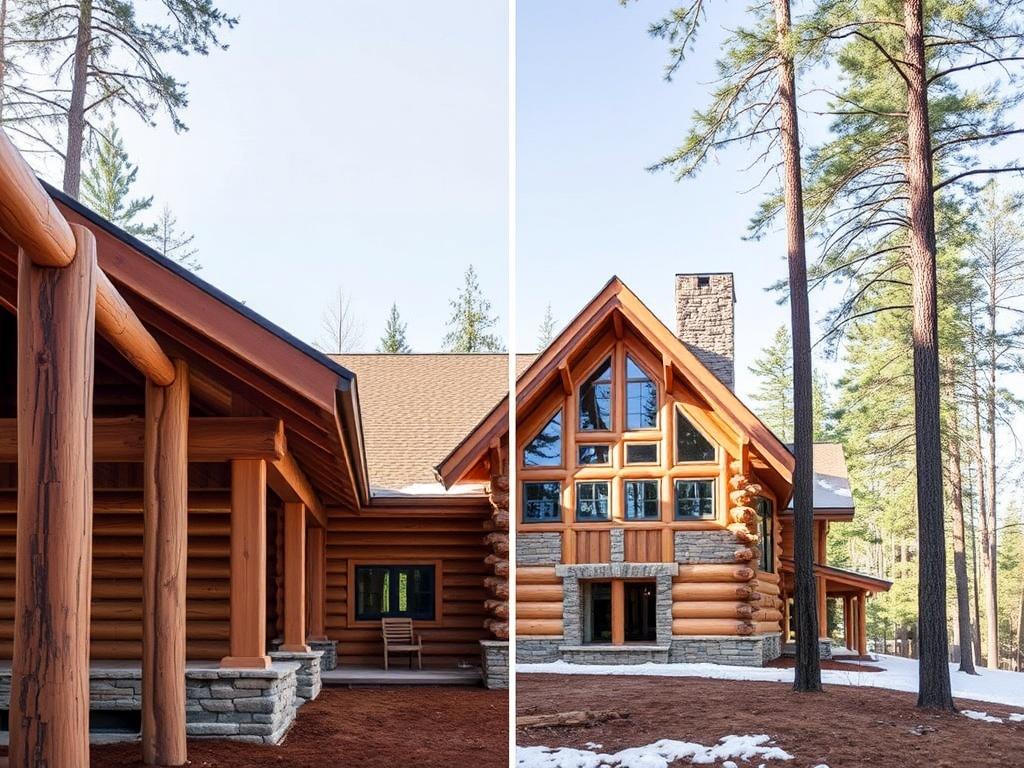
In a log wall, the log itself is the structure and the thermal envelope. The mass of the wood carries loads and resists heat flow to some extent. In a framed wall, the studs hold the load while insulation, air barriers, and cladding form a multi-layer envelope where each layer has a specific job: moisture management, thermal resistance, and airtightness. That difference matters because it influences performance in subtle ways: thermal mass, how you manage moisture, and where you place your insulation and air barrier.
Thermal performance: insulation versus thermal mass
Frame walls achieve their thermal resistance primarily through adding insulation in cavities or continuous insulation on the outside. A typical 2×6 framed wall stuffed with fiberglass or mineral wool will have an R-value in the high teens to low twenties, and when you add exterior continuous insulation and good air sealing the effective thermal performance goes up significantly. Log walls don’t have a thick insulating cavity; their thermal resistance depends on the thickness of the wood and the species. Solid wood has relatively low R-value per inch compared with fibrous insulations, but the thermal mass of the logs evens out temperature swings, storing heat during the day and releasing it at night.
Practically: in most cold climates, a properly insulated framed wall will perform better in terms of steady R-value and heating bills unless the log wall is very thick or augmented with interior/exterior insulation. In milder climates or where passive solar and night cooling are important, the thermal mass of logs can be an advantage.
Airtightness and moisture control
A tight building envelope reduces drafts and keeps conditioned air where it belongs. Framed construction makes it straightforward to plan a continuous air barrier using housewraps, taped sheathing, sealed drywall, or proprietary air barrier membranes. Logs are naturally less airtight because of the joints between logs; that used to be accepted and managed with chinking and gaskets. Modern log construction uses precision-milled logs, engineered gaskets, and mechanical fastening to get much better airtightness, but it still takes careful detailing to equal the performance of a well-sealed framed envelope.
Moisture details are also different. Frame walls rely on a drainage plane and vapor-permeable sheathing systems to move moisture outwards; log walls must avoid water sitting on horizontal log surfaces and depend on wide eaves, proper flashing, and finishes that repel water. Both systems can be durable, but each has unique detailing requirements.
Cost: short-term build costs and long-term ownership costs
Cost conversations often start and end with “per square foot,” but that’s a blunt instrument. Log homes can range from economical to luxurious, depending on the species, milling, complexity, and interior finishes. Framed homes have a wide variance too, but the supply chain for standard framing and cladding is broader and often cheaper because of scale.
Generally speaking, all else equal, a log shell is often 10–30% more expensive than a comparable framed shell if you select higher-grade milled logs and custom joinery. Framing materials are typically less expensive per linear foot of wall, and contractors are plentiful and competitive. However, if you use smaller-diameter logs, reclaimed timber, or build with a simple kit, the gap can narrow. Labor is a major factor: log homes require crews skilled in fitting, settling allowances, and finishing; if those crews are local and plentiful, costs come down. If they must be brought in, costs rise.
Operating costs over time
Operating cost differences often come down to energy efficiency and maintenance. A framed house, if insulated and sealed well, can achieve very low heating and cooling bills. Log homes can also be efficient when designed and sealed properly, but they may require more routine maintenance—staining, sealing, chinking inspections—to remain efficient and weatherproof. Over a 30-year period, modest additional maintenance and finishing work on log exteriors can offset initial savings on more expensive heating systems—if you under-insulate a framed house, you could see higher bills; if you neglect a log house’s exterior, you invite decay and costlier repairs.
Durability and maintenance: what to expect
Wood rots when it stays wet and breathes poorly. Both log and framed homes use wood, but they expose it differently. In frame construction, wood is mostly internal and protected behind cladding and a rain screen, with engineered products such as treated sill plates and housewrap adding protection. In log construction the wood is exposed and requires finishes and detailing that keep moisture away from vulnerable horizontal surfaces, end grains, and roof-to-wall intersections.
Properly designed log homes can last centuries—look at historic log structures in northern latitudes—but they demand attention: re-staining, checking chink lines, watching for settling at corners. Frame homes need periodic cladding maintenance (painting, re-pointing, siding replacement) but the underlying structure is less exposed, which can mean fewer visible maintenance chores. In both cases, prudent design—good overhangs, proper flashing, graded drainage—reduces maintenance needs substantially.
Pests and fire
Pests like termites, carpenter ants, and wood-boring beetles target wood regardless of the structural system, but details matter. Framed homes can use pressure-treated lumber at vulnerable points and keep untreated framing above critical grades. Log homes can be made less attractive to pests through species selection (some species are naturally more resistant), proper moisture control, and surface treatments. Fire risk depends on proximity to combustible vegetation, treatments, and the presence of ember-resistant features. In wildfire-prone areas, both systems can be made more resilient through noncombustible siding, ember-resistant vents, and defensible landscaping.
Aesthetics and lifestyle: what the house feels like
There’s an emotional dimension to this choice. Logs have a tactile warmth and a visual continuity that many people seek: round or milled logs, exposed beams, visible joinery. Those qualities change the interior scale, acoustics, and mood. Frame construction is invisible behind finishes; it allows nearly unlimited architectural expressions—from minimal modern to traditional brick—and easily accommodates deep glazing, thin profiles, and concealed systems.
Beyond looks, living in a log house feels different. The thicker timber walls influence how sound travels and how the interior temperature changes during a day. Some owners describe log living as cozy and grounded; others feel the thick walls make spaces darker unless you design consciously for daylight. Framed houses give more flexibility in wall thickness, window placement, and partitions, which can be an advantage for complex modern plans.
Construction speed and complexity
Speed depends heavily on whether the home is site-built or kit-based. Prefabricated log kits and panelized timber systems can go up rapidly because components are milled off-site and assembled like a puzzle. Traditional hand-fit log construction is slower. Framing is famously quick for experienced crews: a crew can raise the shell of a small framed house in a matter of days, then proceed to the next trades. But both systems have dependencies—long lead times for specialty logs or large glulam beams, or delays for subcontractors in remote areas—that can stretch a schedule.
Site constraints and logistics
Transporting large logs, staged workspace for stack and crane access, and the need for heavy-lift equipment can make log construction more demanding on constrained sites. Framed construction requires material staging too, but components are smaller and more modular. If your lot is tight or access is difficult, framing or panelized construction may save logistical headaches and money.
Environmental footprint and sustainability
Wood is renewable and stores carbon. That makes both log and framed homes potentially low-carbon relative to concrete or steel. The nuances matter: local, sustainably harvested logs reduce embodied carbon from transportation and support responsible forestry. Engineered wood used in framing—like LVL, OSB, and glulam—also stores carbon but requires adhesives and energy in manufacture. Insulation choices matter: closed-cell spray foam has a higher embodied carbon footprint than cellulose or mineral wool. Finish treatments, stains, preservatives, and maintenance cycles influence the long-term environmental picture too.
From a circularity perspective, a durable log home that’s maintained responsibly has a strong sustainability story. A framed home with long-lived cladding and high-performance insulation can also be very sustainable—especially if you design for energy efficiency and avoid fossil-fuel heating where possible.
Regulatory and insurance considerations
Local building codes generally accept both approaches, but you may run into additional inspections or special requirements depending on your jurisdiction. For example, structural connection details, anchoring for seismic zones, and fire-rated assemblies are treated differently between mass timber and light-frame systems. Insurance companies may view log homes differently in wildfire or storm-prone areas; some carriers charge higher premiums for exposed-wood exteriors unless mitigation measures are in place. Check early with your local building department and insurers so you aren’t surprised by special requirements or costs.
Customization and adding systems: HVAC, windows, and interiors
Framed walls make it straightforward to run utilities inside cavities—electrical, plumbing, and ductwork—without interrupting structural continuity. This simplifies retrofits and allows standard insulation placements. Log walls often push services to interior partitions or require creative surface-mounted routes. That’s not a deal-breaker, but it changes how you plan interiors, cabinetry, and finishes.
Windows in log homes often require specialized jambs and flashing details because of settling and movement allowances. Framed walls offer standard window bucks and predictable installation details. If you’re planning large expanses of glass, tall floor-to-ceiling windows, or thin modern window profiles, framed or hybrid systems may be easier to execute.
Retrofits and future adaptability
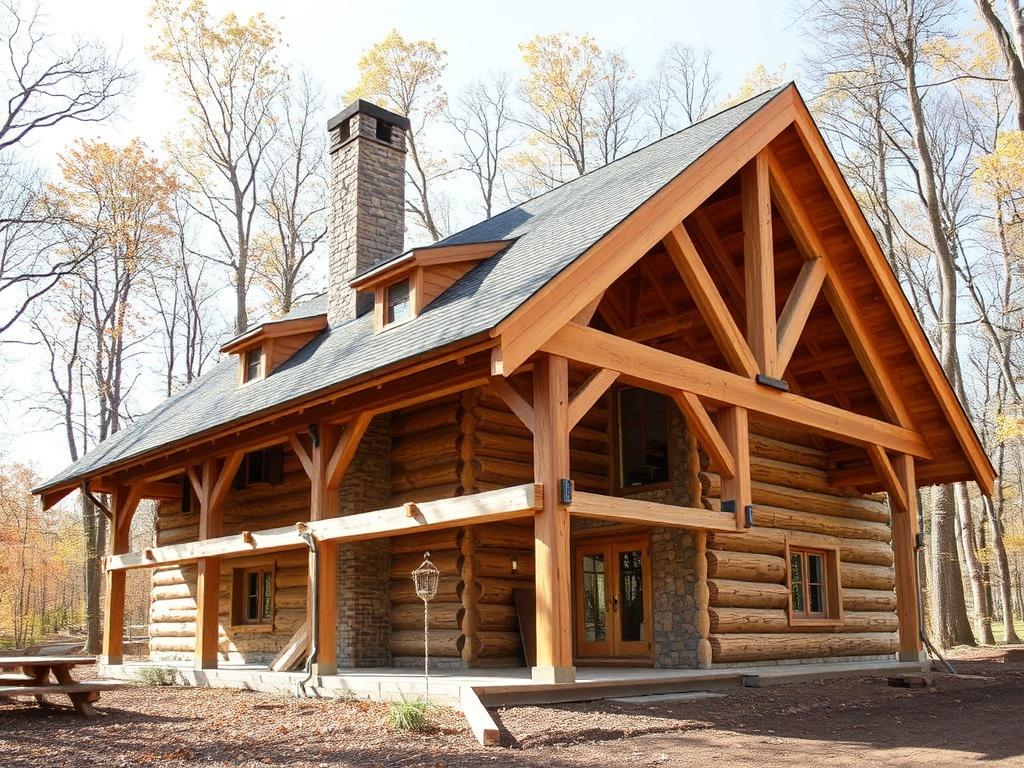
Energy retrofits are more straightforward in framed homes—just open a cavity or add continuous exterior insulation. Log homes can be retrofitted with interior insulation systems, but this often reduces interior dimensions and changes interior finishes. Some owners add additional exterior insulation with a ventilated rainscreen over the logs, but that masks the log appearance. Consider long-term adaptability: if you want to add solar, enlarge windows, or change partitions, framed construction generally offers more flexibility at lower cost.
Regional suitability: match technology to climate
Climate is a decisive factor. In cold, dry climates, thick well-insulated framed walls with continuous insulation and airtight details excel at minimizing heat loss. In temperate or continental climates where diurnal swings are large, the thermal mass of logs can smooth out temperature swings and reduce peak heating or cooling loads. In hot, humid climates, moisture management becomes paramount; avoid construction that holds moisture. In wildfire-prone areas, both systems must be detailed to minimize ember intrusion and use noncombustible materials where required by code.
Case studies: real-world examples
Consider three simplified examples to illustrate how different priorities lead to different choices:
- Mountain retreat for seasonal use: A milled log cabin with wide eaves, a high-performance wood stove, and minimal glazing can be ideal in a mountain setting. The aesthetic and thermal mass create a sense of permanence, and the cabin can be built from a kit for speed.
- Family home in a suburban neighborhood: A 2×6 framed house with continuous exterior insulation, triple-glazed windows, and a heat-pump system offers the best blend of energy efficiency, affordability, and adherence to local covenants and resale expectations.
- Passive solar modern in a temperate region: A hybrid solution—mass timber or log interior wall for thermal mass with an insulated framed exterior—lets you capture the benefits of mass and high insulating performance on the exterior envelope.
Decision matrix: factors to weigh
Use a simple decision matrix to weigh what’s most important: energy efficiency, upfront cost, maintenance tolerance, aesthetics, site constraints, and resale. Assign weight to each factor based on your priorities and score log and framed solutions against them. Below is a compact comparison table to help visualize trade-offs at a glance.
| Factor | Log Construction | Frame Construction |
|---|---|---|
| Upfront cost (typical) | Often higher for milled/custom logs; can be similar with kits | Generally more predictable and often lower |
| Thermal R-value | Moderate; depends on log thickness (thermal mass compensates) | Higher with modern cavity + continuous insulation |
| Airtightness | Historically lower; improved with modern gaskets and chinking | Easier to achieve excellent airtightness with membranes and taping |
| Maintenance | Ongoing exterior maintenance (stains, chinking checks) | Periodic cladding and paint maintenance; less visible structural upkeep |
| Durability | Very durable if detailed and maintained | Very durable; cladding protects structure |
| Environmental footprint | Good if logs are local and sustainably sourced | Good with long-lived materials and low-impact insulation |
| Customization | Beautiful, distinct look; limited by log sizes and joinery | High flexibility for design and openings |
| Resale | Appeals to niche market; may be premium in scenic areas | Broader mass-market appeal |
Practical checklist for making your decision
If you’re standing at the fork in the road, this checklist narrows the decision down to practical, testable questions. Score each item for both technologies based on your project.
- What is the local climate? Do you need continuous high R-values or thermal mass to smooth temperature swings?
- How much maintenance are you willing to accept? Are you comfortable with periodic external finishing work?
- Do you have access to experienced log crews and local mills, or will logs need long-distance shipping?
- How important is resale value in your market? Does your area favor traditional or modern houses?
- Will the site limit deliveries or require specialized equipment for large logs?
- Do you plan future upgrades (solar, windows, additions) that require flexible wall systems?
- What are your aesthetic priorities? Do you want exposed timber to define the interior?
- Are there wildfire or pest risks that push you toward specific treatments or claddings?
- Do you want to minimize embodied carbon and can you source local wood?
- Have you checked insurance implications and local code nuances for mass timber versus light-frame walls?
Hybrid and alternative approaches
You don’t have to choose strictly one or the other. Hybrid approaches combine the best of both technologies. A common model is a heavy timber or log interior that provides character and mass, with a framed and highly insulated exterior wall to maximize R-value. Another is timber framing for the main structure with framed infill panels that contain modern insulation and air barriers. Cross-laminated timber (CLT) and insulated structural panels (SIPs) offer mass timber or panelized options that deliver rapid construction with excellent thermal and airtight performance, sitting between log and traditional framing in terms of look and performance.
SIPs and CLT as alternatives
SIPs (structural insulated panels) combine structural sheathing and insulation in a factory-made sandwich, offering fast assembly and excellent thermal performance. CLT is engineered mass timber that provides solid panels with dimensional stability and predictable performance. Both can give you timber aesthetics with less on-site maintenance than raw logs and with better insulating performance, but they come at a premium and require precision detailing for moisture and fire resistance.
Common misconceptions
A few myths crop up repeatedly. First: “Log homes are always drafty and inefficient.” Not true when modern milling, gaskets, and finishes are applied. Second: “Framed homes are always cheaper.” Often true, but customization, high-end finishes, and site logistics can make framed homes expensive too. Third: “Logs are more flammable.” Logs can perform well in fire if they char predictably and are maintained; the context—vegetation, ember exposure, and treatments—matters more than the material alone.
Questions to ask your builder
When interviewing builders and suppliers, get specific. Ask to see samples and references for similar climate and site conditions. Here are practical queries that reveal competency and reduce surprises:
- Can you show energy-use examples from completed projects in similar climates?
- How do you handle settling in log walls and what is your warranty on log joints and chinking?
- For framed walls, what is the continuous insulation and air-sealing strategy?
- What treatments do you use for exterior protection and how often do they need reapplication?
- How do you detail connections at windows, doors, and roof-to-wall transitions?
- What are the planned tolerances and how do you ensure dimensional stability for large openings?
- Who handles the maintenance orientation with the owner after handover?
Financing, appraisal, and resale nuances
Lenders and appraisers are accustomed to both systems, but documentation helps. Provide comparable sales and detailed specifications when financing a log home, particularly if it’s an unusual species or a custom system. In some markets, log homes command a premium for scenic appeal; in others, they appeal to a niche buyer willing to pay for character. For framed homes, consistency with neighborhood expectations tends to support broader marketability.
Final practical tips before you commit
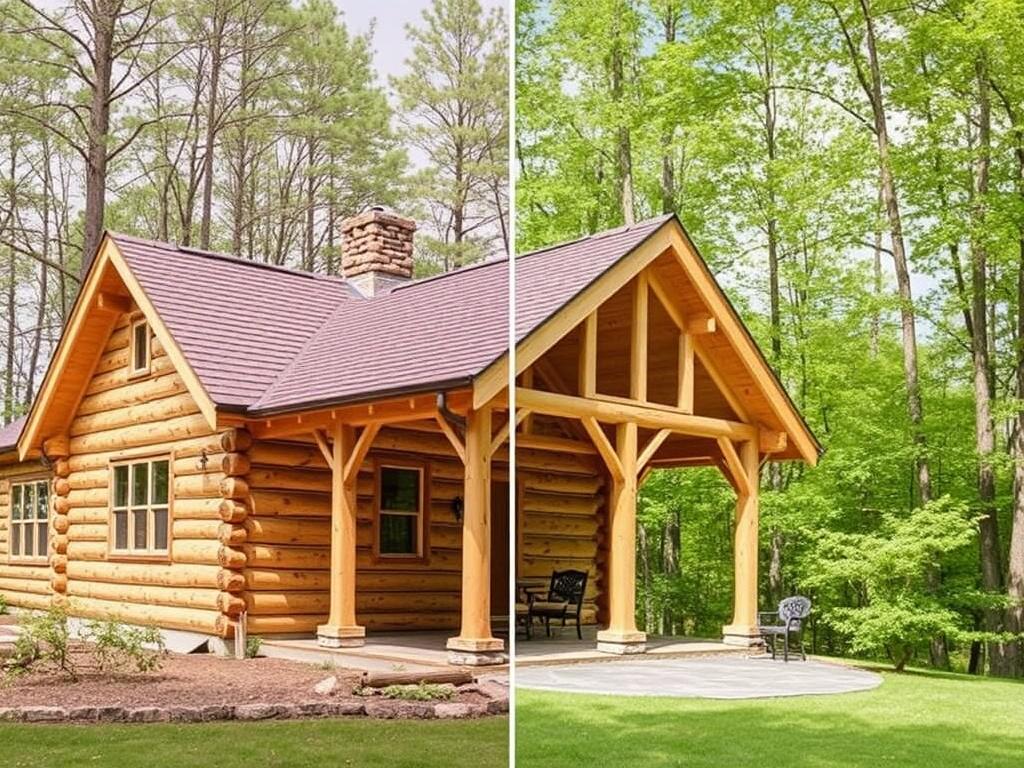
Visit completed homes of both types in your region. Feel the interior, listen for sound differences, watch how daylight reads off the surfaces, and ask owners about their maintenance routines and energy bills. If possible, spend a night in a log home in winter and in a framed, highly insulated house in extreme conditions. Real experience trumps brochures on comfort and livability.
Budget consciously for maintenance in your financial plan. Even if the upfront price for a log shell is attractive, factor in periodic staining, chinking checks, and potential resealing. For framed houses, budget for cladding lifecycles, paint, and possible siding replacement. And always include contingencies for site surprises, which strike both technologies equally.
Conclusion
There is no universal answer: the right choice depends on climate, site, budget, maintenance tolerance, aesthetic priorities, and long-term plans. Choose log construction if you prize natural character, thermal mass benefits, and a tactile, enduring aesthetic and you are prepared to manage exterior maintenance and detailing. Choose framed construction if you need predictable high R-values, airtightness, design flexibility, and easier utility integration at typically lower upfront cost and broader contractor availability. Or blend the two: hybrids can deliver mass, beauty, and modern performance in a single design. The wisest decision comes from matching the technology to your goals and constraints, visiting real examples, consulting experienced builders, and planning for both the money and the upkeep a house will require over decades—not just at move-in.

