
Warm Stones and Steam: The Long, Strange Life of the Bathhouse
The bathhouse is a human invention that reads like a travelogue of civilization: pools in the damp cradle of the Indus; tiled halls echoing with Roman laughter; steam-saturated rooms in the medinas of North Africa; the quiet ritual of a Japanese onsen at dawn. It’s a practical solution—clean water, heat, a place to wash—but it has always been more than plumbing. Bathhouses have been theaters for social life, engines of public health, places of ritual, and canvases for architecture. They hold stories about how humans organized cities, controlled water, treated bodies, negotiated gender and class, and imagined leisure.
This article traces that story. We will move chronologically and geographically, from prehistoric pools to modern spas and saunas, pausing to consider technology, social meanings, architecture, and the ways public policy shaped access. I’ll highlight distinctive traditions—Roman thermae, Islamic hammams, Japanese onsens, Korean jjimjilbangs—and show how similar needs produced different solutions. Along the way you’ll find practical lists, a comparative table, and reflections on what the bathhouse might become in an era of wellness brands and climate constraints.
Earliest Baths: Water, Ritual, and Public Works
Long before tiled rooms and hypocausts, people sought concentrated, managed water. The remains of the Great Bath at Mohenjo-daro (c. 2600–1900 BCE) in the Indus Valley are among the earliest large-scale public bathing structures archaeologists have found: a waterproofed pool large enough for ritual immersion, approached by steps, set within a planned urban grid. In Mesopotamia and ancient Egypt, daily washing had religious significance and practical value in arid climates where access to clean water mattered for health and ritual purity.
Communal washing was often bound to sacred life. Temples and shrines held basins and courtyards for ritual ablutions. But even when bathing had religious overtones, local communities and emerging states invested in infrastructure—cisterns, wells, channels—to support regular washing. Those investments laid the groundwork for later, more complex bathhouses by concentrating expertise around waterproofing, water-moving, and crowd management.
Greek Precedents: From Simple Pools to Public Baths
In ancient Greece, bathing began simply: private washing at home, public fountains, and occasional communal facilities tied to gymnasia. The Greeks emphasized cleanliness and athletic training—bath and gym facilities often belonged together. Unlike the Romans who later turned bathing into a civic spectacle, early Greek bathing tended to be smaller-scale and integrated with social life in athletic and philosophical contexts. Still, the idea of bathing as a communal daily practice—an element of urban life—was present.
Rome: Bathing as Civic Theater
If any civilization transformed bathing into a public art, it was Rome. From the first centuries BCE through the imperial age, Roman thermae became vast complexes combining hot and cold pools, steam rooms, exercise yards, libraries, gardens, and shops. The engineering was impressive: hypocaust underfloor heating, carefully graded aqueducts delivering fresh water, drainage systems for waste. Bathing was both a daily routine and a social magnet. Emperors and magistrates built baths as gifts to the populace; bath complexes signaled civic pride and imperial generosity.
Romans standardized a sequence—frigidarium (cold room), tepidarium (warm room), caldarium (hot room)—that controlled temperature and movement. The thermae were gendered in many places (separate hours or separate wings for men and women), but they were also spaces where classes mixed: a wealthy senator might sit near a craftsman, and merchants used baths for business conversations. For the Roman city, the bathhouse was a civic institution as central as the forum.
From Rome to the Medinas: The Hammam and Byzantine Continuities
When the Western Roman Empire fragmented, many of its institutions faded. Yet the basic technology and cultural habit of communal bathing persisted in the Eastern Mediterranean and the Islamic world. Byzantine public baths continued the Roman sequence in many cities. With the rise of Islam, the hammam evolved from these precedents into a distinctive institution, spreading across North Africa, the Middle East, and later into parts of Europe through Ottoman influence.
Hammams typically adapt the Roman spatial logic—cold, warm, and hot rooms—but add ritualized washing practices tied to cleanliness rules in Islamic law. They often occupy a central place in neighborhood life: places for purification before prayer, for weddings and births, for massage and socializing. Architecturally, hammams are notable for domed ceilings, small star-shaped skylights, and decorative tilework that married function to aesthetic pleasure. They were usually gender-segregated by time or space, offering women and men separate opportunities for communal life.
Design and Ritual in the Islamic Bathhouse
A typical hammam moves bathers through a procession of temperature and activity: undressing, an initial steam, a lathering scrub by an attendant, a final cool rinse. The sequence is both hygienic and restorative. Hammams also often hosted ancillary services—barbering, massage, gossip—making them nodes of information flow. In many medieval towns, the bathhouse was one of the few semi-public indoor spaces where women gathered regularly outside the household.
East Asian Traditions: Sentō, Onsen, and Jjimjilbang
East Asia developed distinct bathing cultures that foregrounded thermal springs and ritual purification. Japan’s onsen culture, with hot springs used for leisure and health, draws on both Shinto ideas about nature’s sacredness and Buddhist notions of purification. The sentō—urban public baths—arose to serve those without private bathing facilities, and they became places for neighborly contact and artistic murals.
Onsen and sentō differ: onsen are centered on natural mineral springs and often tied to travel and pilgrimage; sentō are urban and social. Both enforce practices—washing before entering the communal pools, quiet reflection, often gender separation—that create a shared etiquette. Korea’s jjimjilbang combines sauna culture with family leisure: mixed-gender common areas for lounging, sleeping, and entertainment, plus gender-segregated bathing spaces. In China, public baths and foot-bathing houses have long been part of urban life, though rapid modernization has altered availability and form.
Medieval Europe and the Long Shadow of Plague
Public bathing continued in medieval Europe—baths in monasteries, city bathhouses, and transient uses of steam and hot tubs. But with the Black Death and recurring plague outbreaks, bathing came under suspicion in some quarters. A mixture of misunderstood contagion theories and changing moral anxieties led to declines in public bathing in parts of Europe by the late medieval period. Some authorities feared that bathing opened pores and made bodies vulnerable to disease; others associated public bathhouses with immoral behavior. Where bathing survived, it was often in more modest, localized forms.
At the same time, in parts of the Mediterranean and in the Ottoman domains, bathhouses thrived. The split between northern European practices and southern/Ottoman ones reflects how climate, urban density, religious rules, and political continuity influence hygienic culture. These divergences remind us that the bathhouse’s fate was never only about technology; it was also about beliefs, economics, and governance.
Industrial Cities and the Return of Public Baths
The 19th century brought a decisive change. Rapid urbanization, factory work, and crowded tenements created pressing public health problems. Reformers argued that lack of washing contributed to disease, and municipal governments began to invest in public baths and washhouses to serve working-class populations. These were not luxuries; they were part of a program to reduce illness, improve morale, and stabilize urban life.
Many cities built grand public baths as civic amenities. They were sometimes modeled on the Roman ideal—ample pools, ornate facades, and segregated facilities—but also scaled to practical needs: large washrooms, laundry facilities, and cheap, accessible bathing hours. In Britain, legislation such as the Public Baths and Wash-houses Act of 1846 enabled local authorities to provide these services. Continental Europe and the United States saw similar movements, often mixed with therapeutic ideas about steam and “Turkish baths” that proliferated as health fads and social institutions.
The Victorian Balance of Hygiene and Morality
Victorian-era public baths had to negotiate moral anxieties about mixed bathing and nudity. Many offered separate hours, partitions, or gendered sections. They promoted personal cleanliness as a civic virtue: good hygiene became linked to moral improvement, workforce productivity, and social order. The architecture often reflected moral seriousness: austere but robust buildings emphasizing order and oversight.
20th Century Transformations: Private Bathrooms, Health Science, and Leisure
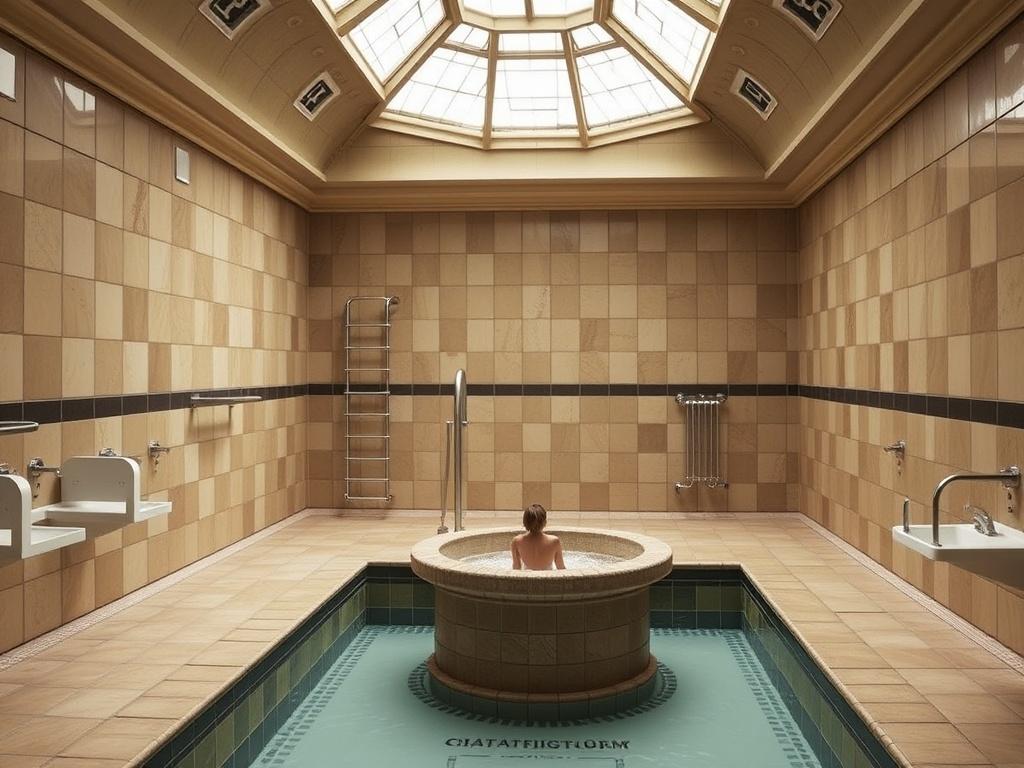
The 20th century saw household bathrooms become commonplace in many industrialized nations, reducing demand for municipal bathing in some places. Plumbing, hot water heaters, and sewer systems made private bathing convenient. As a result, some public baths closed or were repurposed; others survived by shifting toward leisure and wellness markets—spa treatments, therapeutic baths, and luxury facilities for the middle class.
At the same time, new research reframed bathing as part of medical and recreational science. Hydrotherapy clinics emphasized therapeutic benefits for musculoskeletal and circulatory conditions. Later in the century, studies on sauna use suggested health correlations—regular sauna bathing, in some longitudinal studies, was associated with reduced cardiovascular risk—though such findings require careful interpretation and do not mean saunas are a panacea.
Architecture and Engineering: From Hypocaust to High-Tech
The bathhouse’s history is, in part, a history of applied engineering. Roman hypocausts—under-floor furnaces that heated rooms and pools—were sophisticated solutions for their time. Medieval and Islamic bathhouses perfected water routing and gravity-fed heating. Japanese onsen leveraged natural geothermal heat. Modern baths add boilers, heat exchangers, filtration systems, and chemical dosing to maintain water quality.
Materials and aesthetics evolved hand in hand with technology. Marble, mosaic, and carved stone gave way to tiles, glazing, and modern waterproof membranes. Skylights and domes evolved for ventilation and light; contemporary eco-conscious designs add heat recovery systems, graywater recycling, and solar preheating. Good design still balances three constraints: hygiene, comfort, and social use.
Comparative Table: Bathhouse Types at a Glance
| Type | Region / Period | Heating / Water Source | Typical Social Role | Gender Practice |
|---|---|---|---|---|
| Indus Great Bath | Indus Valley, Bronze Age | Rainwater / city cisterns | Ritual immersion / civic symbol | Unknown / likely segregated ritual use |
| Roman Thermae | Roman Empire, Antiquity | Aqueducts / hypocausts | Social, recreational, civic | Often segregated by time or space |
| Hammam | Islamic world, medieval to present | Furnaces / hot water pipes | Religious purification, social hub | Segregated (hours/rooms) |
| Onsen / Sentō | Japan, historical to present | Geothermal springs / heated water | Leisure, spiritual cleansing, community | Often segregated; mixed at family onsen rarely |
| Victorian Public Bath | 19th-century Europe and Americas | Boilers, municipal water | Public health, laundry, social reform | Separate hours / segregated pools |
| Modern Spa / Sauna | Global, 20th–21st century | Electric/boiler heating, filtration | Wellness, recreation, tourism | Varies widely |
Ritual, Social Life, and Gender
Bathhouses are more than places to remove grime. They are social machines that structure interaction. In many cultures, bathhouses have functioned as places for networking, matchmaking, political discussion, and the exchange of news. They are liminal spaces—neither fully private nor public—where people negotiate social norms in concentrated encounters.
Gender norms around bathing reveal a lot about societies. Some bathhouses enforce strict separation; others offer mixed spaces. The rules can be subtle—certain hours, specific rooms, or clothing requirements. In many historical contexts, women used bathhouses as rare public venues for social life and mutual support. In others, bathing became hyper-regulated to reflect anxieties about morality. Contemporary debates about gender-neutral spaces, family bathing, and accessibility reflect the same underlying question: who gets access to public warmth and water?
Famous Bathhouses You Can Still Visit
Here are a few surviving or well-preserved places that connect directly to these traditions:
- Roman Baths, Bath (England) — a remarkably well-preserved Roman complex built over natural hot springs.
- Baths of Caracalla and Baths of Diocletian (Rome) — imperial-scale ancient complexes illustrating Roman engineering.
- Great Bath at Mohenjo-daro (Pakistan) — an early, large public water structure from the Indus civilization.
- Historic hammams in Fez and Marrakech (Morocco) — living examples of medieval Islamic bathing traditions.
- Japanese onsen towns such as Beppu and Hakone — offering a spectrum of traditional bathing experiences.
- Eastern European and Turkish public baths restored as cultural sites — a mixture of restored architectural beauty and contemporary use.
Health, Science, and Controversy
The relationship between bathing and health has swung through phases of belief and skepticism. Early modern Europeans sometimes worried that bathing opened the pores to disease; later, social reformers argued that washing prevented illness. Modern epidemiology has clarified many things: good hygiene reduces infectious disease transmission, while certain public bathing practices—if poorly managed—can spread pathogens. That understanding drove the development of modern filtration, chlorination, and sanitation standards.
Beyond infection control, controlled heat exposure from saunas and thermal bathing is being studied for cardiovascular and neurological effects. Several well-designed cohort studies, particularly from Nordic countries, suggest that regular sauna bathing is associated with lower rates of cardiovascular disease and all-cause mortality. That evidence is interesting but not definitive causation; lifestyle correlates (exercise, diet, social factors) play roles. Still, the convergence of ancient practice and modern research speaks to a persistent human intuition: concentrated warmth and water alter bodies and minds.
Contemporary Trends: Wellness, Sustainability, and Technology
The 21st century has given the bathhouse new identities. The global wellness industry has elevated “spa” into an aspirational brand: treatments framed as detoxes, mindfulness-enhancing rituals, and curated experiences that blend traditional techniques with modern aesthetics. At the same time, climate pressures and water scarcity push designers and operators toward conservation: graywater systems, efficient filtration, heat recovery, and careful scheduling reduce energy and water footprints.
Technology has changed how people interact with bathhouses, too. Digital bookings, dynamic pricing, and mobile-first experiences make visits easier. Virtual wellness—home infrared saunas, app-guided meditations paired with hot baths—compete with in-person rituals. Yet many people still seek the social and embodied pleasures of communal bathing: the slow, quiet time, the conversation in a steamy room, the shared hum of bodies at rest.
Emerging debates touch on cultural appropriation, commodification, and access. When luxury brands package traditional practices (hammams, onsen rituals) as commodities for wealthy tourists, communities sometimes lose control over how those practices are represented. There’s a balancing act between preserving authenticity, supporting local economies, and allowing cultural exchange.
Designing the Bathhouse of the Future
If the future bathhouse is sustainable, accessible, and socially inclusive, what does it look like? Expect modular spaces adaptable to different uses (therapy, socializing, solo relaxation), integrated water recycling, passive heating and cooling, and flexible gender policies. Technology will optimize operations, not replace the sensory, tactile experience that makes bathing meaningful. Designers who succeed will attend to the small, human details: comfortable seating, discreet privacy options, clear etiquette, and services that bridge wellness with community.
Practical Etiquette and Tips for Visiting a Bathhouse
Whether you’re stepping into a Roman ruin with a reconstructed pool, a Turkish hammam, or a modern urban spa, certain practices make the experience better for everyone. Here are practical tips:
- Learn the local rules before you go: many cultures require washing before entering shared pools and have strict clothing rules (nudity permitted or not).
- Shower thoroughly before entering communal water to remove lotions and dirt.
- Respect gendered hours and privacy requests; if mixed-gender areas exist, observe the norm quietly.
- Modesty options: bring a towel or wrap if required or if you feel more comfortable.
- Keep conversations quiet and non-intrusive; many patrons seek relaxation rather than social performance.
- Stay hydrated, and avoid alcohol before intense heat sessions to reduce dehydration risk.
- If receiving treatments, check credentials of attendants and understand any health contraindications.
Preservation, Adaptive Reuse, and Cultural Memory
Old bathhouses pose interesting preservation questions. Some become museums, others find new life as performance venues, restaurants, or cultural centers. Adaptive reuse can preserve architectural heritage while meeting contemporary needs, but it risks erasing original practices. Conservationists argue for approaches that retain the sensory and social qualities of bathhouses—materials, light, spatial sequencing—so visitors can sense the original experience rather than merely see relics.
In many cities, saving a historic bathhouse means more than preserving a building; it’s about keeping a civic ritual alive. Community-driven projects that combine restoration with contemporary services—public baths that still serve local residents—offer models for how heritage and living practice can coexist.
Global Patterns and Local Particularities
Throughout history, the bathhouse has shown a pattern: similar problems (need to wash, need for heat, need for social space) generate a range of local solutions shaped by climate, technology, religion, and politics. In cold northern lands, saunas and heated rooms are vital and social; in volcanic countries, natural hot springs become centers of leisure and pilgrimage; in arid regions, careful water management shapes bathing practices.
There is no single “bathhouse culture”; there are many cultures of bathing with overlapping themes: ritual, healing, community. The bathhouse endures because it answers human needs at multiple levels—physiological, social, aesthetic.
Key Lessons from a Long History
Looking across millennia, a few lessons stand out:
- Infrastructure matters. Investment in water systems and heating technology shapes social possibilities.
- Public policy determines access. Laws and civic planning—whether subsidies for municipal baths or regulations that close them—can expand or eliminate public bathing.
- Culture mediates technology. The same engineering can produce different social spaces depending on etiquette, gender norms, and ritual uses.
- Adaptation keeps traditions alive. Bathhouses that adapted—by providing laundry services, therapeutic treatments, or privacy options—survived changing times.
Where Bathhouses Still Matter Today
In many neighborhoods worldwide, public baths still serve people who lack private facilities. They remain important for low-cost hygiene, for elders who benefit from warm pools, and for communities maintaining cultural rituals. In tourist economies, historic bathhouses are attractions that teach visitors about local history—but the most meaningful examples are those that continue to serve their neighborhoods rather than becoming exclusive relics.
At the same time, the wellness industry’s appetite for curated bathing rituals has given new life to ancient practices. That demand can support preservation and craft traditions—massage techniques, tilework, heating systems—if it is channeled responsibly.
Conclusion
From ancient pools and Roman marble to edgy urban spas and quiet rural onsen, the bathhouse is less an artifact than a living idea: a place where water, heat, architecture, and social life come together in service of the body and the city. It reveals how humans organize commons, manage health, and create rituals around the ordinary. The future of the bathhouse will hinge on choices—how societies manage water, who gets access to communal spaces, how we balance tradition with innovation—but if history is any guide, bathing will remain an intimate, civic, and surprisingly resilient part of human life.

