
How to Make a Proper Bathhouse Broom: Harvesting and Choosing Wood
There’s a quiet pleasure in crafting a tool that belongs to a ritual. The bathhouse broom — venik in Russian, vihta in Finnish — is more than a bundle of twigs bound together. It’s a sensory object that steams, snaps, and perfumes the air; it whips warmth into skin and memory. Making one well demands attention to the wood you choose, the season you harvest, and the way you bind and care for the twigs. This guide walks through each decision clearly: which species work best, how to harvest ethically, how to prepare and dry branches, how to assemble the broom, and how to maintain it so it lasts and performs. You’ll finish with the know-how to create a broom that smells good, won’t spatter leaves all over the steam room, and will deliver the satisfying, tickling swish that makes a real bathhouse session feel complete.
Why the right wood matters
Not every branch will make a proper venik. Wood choice affects aroma, leaf retention, flexibility, and how the twigs behave in steam. A good broom should be supple enough to bend without breaking, have leaves that hold onto the twigs rather than fly off, and give a pleasant scent when heated. Some woods are inherently medicinal, releasing essential oils that open the sinuses and soothe muscles. Others are sturdy and long-lived but lack fragrance. Choosing wood is the first decision that determines the broom’s character.
Functional qualities to look for
Think of the broom as a tool with four needs: flexibility, leaf retention, heat-responsiveness, and scent. Flexibility means the twigs will wrap around small muscles and lay flat on broad surfaces without snapping. Leaf retention keeps the bathhouse tidy. Heat-responsiveness refers to how the wood releases oils — a warm, resinous aroma is ideal. Scent is the icing: it can be faint, fresh, or medicinal, depending on the species.
Common species and what they bring
Different cultures favor different trees. Birch is classic across Northern Europe for its light, peppery scent and gentle leaves. Oak yields a weightier broom with firm twigs and tannic notes that can be slightly astringent. Eucalyptus brings a sharp, clearing aroma and works well when dried carefully. Linden (lime) has soft leaves and a sweet fragrance, while alder and maple can be good compromises between scent and durability. Each species calls for slight changes in handling — the right harvest time, drying period, and binding technique.
| Wood | Typical aroma | Flexibility | Leaf retention | Best for |
|---|---|---|---|---|
| Birch | Fresh, slightly spicy | High | Good | Gentle, aromatic sweeps; traditional venik |
| Oak | Earthy, tannic | Medium | Very good | Sturdy, long-lasting brooms for vigorous massage |
| Eucalyptus | Sharp, menthol | Medium | Fair | Clearing airways; mixing with other wood |
| Linden (Lime) | Sweet, floral | High | Fair | Delicate brooms; soothing aroma |
| Alder | Smoky, mild | High | Good | Balanced option; responsive in steam |
| Maple | Mild, clean | Medium | Good | Durable, smooth-feeling brooms |
When to harvest: timing matters
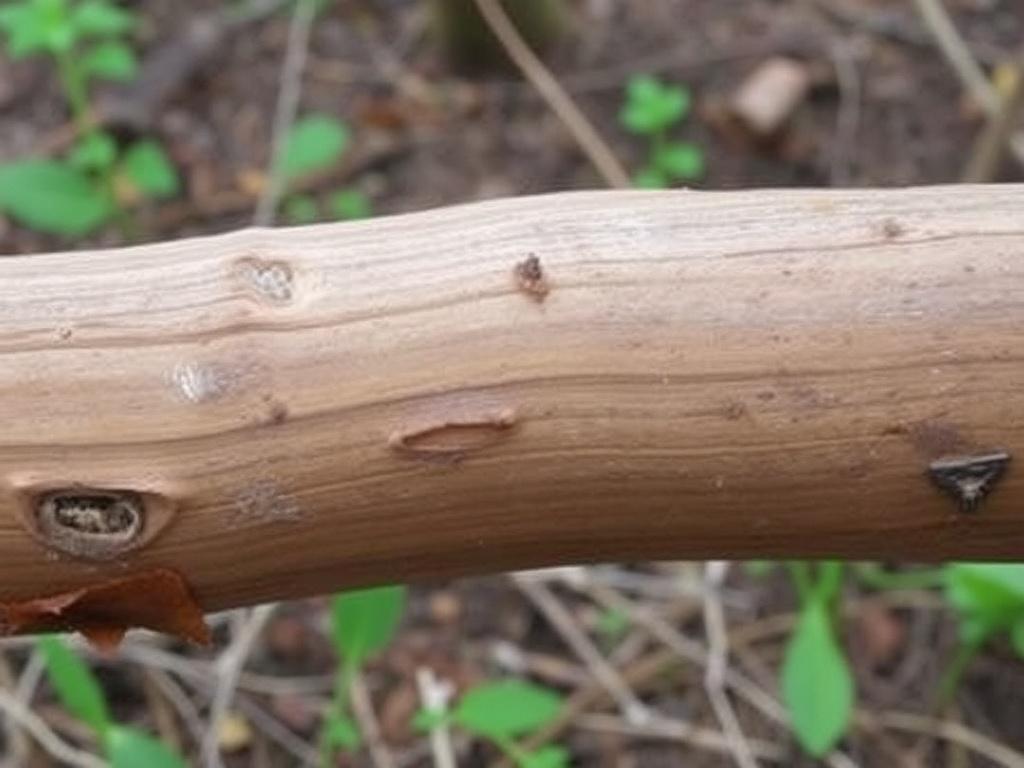
Timing affects sap content, leaf vigor, and twig strength. For most deciduous species, late spring and early summer — when leaves are fully unfurled but the tree is not yet stressed by high heat — is ideal. At this point the twigs are active, flexible, and loaded with the oils and moisture that give a broom its aroma and resilience. In practice, many traditional venik makers harvest in June, sometimes in early July depending on local climate.
There’s a different tactic for oak and other late-blooming species: harvesting in late summer or early autumn can yield firmer twigs with great longevity, although they may have a lower aromatic profile. If you’re collecting from a stand of trees that experiences harsh winters, avoid harvesting when the ground is frozen or in deep winter, because the wood will be brittle and the leaves sparse.
Harvest schedule by species (quick guide)
- Birch: late May to mid-July.
- Linden (Lime): June to early July.
- Oak: late July to September for durable twigs; spring for sap-rich branches.
- Eucalyptus: anytime in warm climates, but avoid extremes of drought.
- Alder: late spring to early summer.
- Maple: late spring to early summer.
Ethical and safe harvesting
Respect trees. Over-harvesting damages growth and harms ecosystems. When you cut branches, take from multiple trees and avoid stripping a single tree of most of its living branches. Prune responsibly: cut small-diameter live branches (pencil- to thumb-sized) rather than large limbs that scar the trunk. Use proper pruning tools and make clean cuts just outside the branch collar. If you’re on private land, secure permission. If you’re on public land, check local rules — many parks prohibit cutting live wood, while some allow gathering deadwood with a permit.
Safety matters too. Wear gloves and eye protection, and be mindful of terrain and wildlife. Carry a pruning saw or loppers with a sheath. Never climb into unstable trees; instead, use a pole pruner for higher branches. If you’re harvesting in a wet season, avoid working on slippery banks or near steep drop-offs.
How much to take and how to choose branches
For one full-size broom, you’ll need roughly 1.5 to 2.5 kilograms of branches, depending on wood density and broom style. Select straight, longish branches with plenty of small side twigs rather than a few thick pieces. Look for healthy leaves, minimal insect damage, and branches that bend without splintering. Avoid branches that are fungal, rotten, or heavily bored by insects. Mix branch diameters for a fuller broom: a handful of slightly thicker stems at the core will add backbone while thinner twigs make the brushier outer surface.
Tools and materials you’ll need
The list is simple but purposeful. Having the right tools speeds the job and improves results.
- Pruning shears (garden secateurs) for small twigs.
- Lopping shears for thicker branches.
- Hand saw or folding pruning saw for larger cuts.
- Sharp knife for trimming leaves and bark where needed.
- Binding materials: natural twine, linen cord, or cotton rope. Avoid plastic as it won’t breathe.
- Scissors for trimming cord and decorative knots.
- Bucket or tub of clean water for immediate soaking after harvest.
- Optional: aromatic herbs (e.g., chamomile, rosemary, mint) to weave into the broom.
Preparing branches immediately after harvesting
Once cut, branches will start to wilt. The trick is to keep them at their most flexible state until you bind them. Many traditional makers place bundles in a bucket of cool water right away and let them sit for a day to rehydrate. If leaves are covered in dust or insects, give the branches a gentle shake and an optional light rinse; don’t soak for long periods if the wood is prone to mold.
Sort branches by length and diameter. Put similar pieces together so your finished broom looks even. Strip any large, dead leaves or broken pieces that would flake off, but leave healthy green leaves intact — they contribute to scent and steam behavior.
Handling species-specific quirks
Birch: Leaves bruise easily. Handle gently and avoid long exposure to sun before binding. A short soak helps keep the twigs pliant.
Oak: Heavier branches benefit from a brief longitudinal split of the thicker stems if you want them to bend more easily. Oak dries slowly; plan on longer conditioning time.
Eucalyptus: Oils can be intense and irritate fingers for some people. Wear gloves and avoid binding too tightly; excessive crushing can release too much oil and diminish leaf life.
Drying vs. using fresh: which approach?
Both fresh (green) and dried veniks are valid — they serve different purposes. Green brooms offer the strongest aroma and the most flexible leaves; they steam beautifully and are used the same day or within a few days of harvest. Dried brooms are lighter, store longer, and are less messy if you want an item to keep on the shelf for months. Some bathhouse lovers prefer mixing both: a core of dried branches with fresh outer twigs preserves longevity while giving immediate scent during the first uses.
How you dry matters. Never bake branches in direct heat; that makes them brittle. For drying:
- Bundle loosely with twine and hang upside down in a cool, dark, well-ventilated area.
- Allow gradual drying over two to four weeks depending on thickness and species.
- Check periodically for mold or insect activity; discard any compromised branches.
- For eucalyptus or resinous woods, a shorter drying time preserves oil; test a small piece.
Step-by-step: assembling a traditional bathhouse broom
Here’s a practical, stepwise process that balances economy with craftsmanship. Follow this for a dependable broom that behaves well in steam.
Step 1 — Sorting and layout
Lay your selected branches out by size, with thicker stems in the middle and thinner twigs to the outside. Aim for a tapered shape: fuller at the top (the sweeping end) and narrower at the handle. Count your twigs; many makers use 40–80 individual stems depending on thickness and desired fullness.
Step 2 — Forming the core
Create a core bundle of the sturdiest branches — these provide the handle and backbone. Align their cut ends evenly. Tie them firmly about 10–15 centimeters from the end with a short length of twine using a constricting knot so the core won’t slip. Leave a little of the cut end exposed to form the handle. If you want a rounded handle, carve and sand the cut ends slightly to avoid splinters.
Step 3 — Adding outer twigs
Start wrapping outer twigs around the core: place a layer, then bind again a few centimeters above the first binding, working your way up. Each additional layer should be secured so the broom becomes denser at the top. Use a figure-eight or hemp wrapping pattern for stability — wrap tight but not so tight that the twigs are crushed; the broom needs air to breathe. Keep the outer surface even by trimming any stray bits as you go.
Step 4 — Final binding and finishing knots
Finish with a few strong turns of cord about 2–3 centimeters below the top of the sweep to secure the bunch. For a neat handle, wrap twine tightly around the remaining shaft, covering raw ends. Decorate with a simple knot or a small loop to hang the broom. Trim cut ends at the top where necessary to make the sweep uniform.
Step 5 — Conditioning and testing
If the broom was assembled from fresh branches, gently soak the whole thing in cool water for 10–30 minutes before first use to allow full hydration. For a dried broom, refresh it in steam or a brief soak to awaken oils. Test the broom in a mild steam to see how it behaves; adjust binding if some branches separate too easily. The ideal broom bends and drapes smoothly without dropping a blizzard of leaves.
Decorative touches and variations
You can make practical choices look lovely. A braid of colored twine on the handle gives character and makes the broom easier to grip when wet. Weaving aromatic herbs like rosemary, sage, or chamomile into the outer layer enhances scent and can add visually pleasing texture. Some makers add a small loop or leather strap for hanging.
Consider a layered broom: place fragrant species like eucalyptus on the outermost layer for initial impact, with a quieter inner layer of oak or alder for durability. Alternatively, alternate bands of two species for a striped effect that smells complex and looks striking.
Storage and care to extend life
Proper storage keeps the broom ready for many sessions. If you use green brooms, store them in a cool, shaded place and use within a week or so. Dried brooms should be hung upside down in a dry, ventilated area away from direct sunlight and pests. Avoid plastic bags that trap moisture and encourage mold.
After each use, rinse the broom lightly and let it air-dry fully before storing. If a broom develops an off-smell, carpet of dust, or signs of mold, discard it; don’t try to salvage with chemicals — you’ll lose the natural aroma and risk skin irritation. For minor leaf loss, strip loose pieces away and re-tidy the surface.
Repairing minor damage
If a few twigs break or loosen, rewrap that segment with fresh twine and tuck in a few replacement slender branches to fill gaps. For split core stems, add additional thin rods inside the core and rebind tightly. Repairs are best done soon after use while twigs are still slightly flexible.
Using the broom in the bathhouse
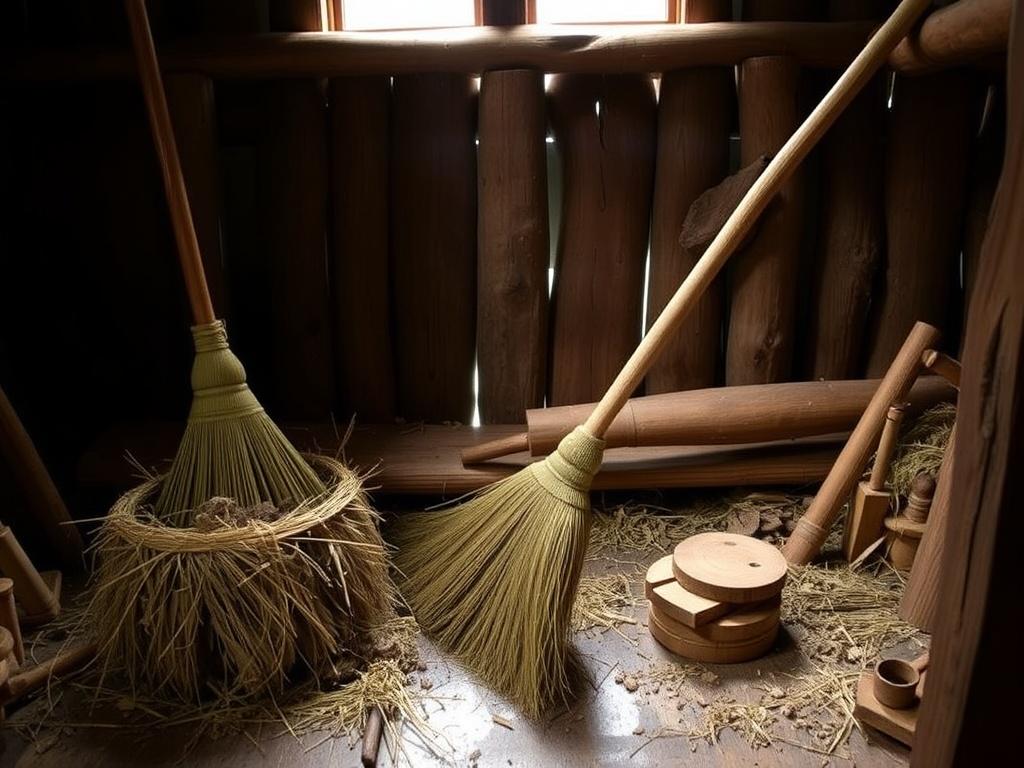
Technique matters as much as construction. Warm the broom gently in the steam before vigorous use. A common routine: place the venik in hot water or steam for a minute to awaken oils, then lightly slap it against a towel to remove excess water. Use a gentle patting and sweeping motion at first to acclimate the skin, then increase pressure where muscle work is desired. Circular motions help distribute warmth, while layered slaps stimulate circulation.
Pay attention to partners’ comfort and avoid striking joints or the spine directly. Communicate: the person receiving the “beating” should let you know if it’s too intense. For self-use, start with the outer limbs and work toward larger muscle groups. The venik’s purpose is a mix of fragrance, warmth transfer, and therapeutic tapping — not punishment.
Common mistakes and troubleshooting
Several pitfalls can spoil an otherwise fine broom. Here are frequent issues and how to avoid them:
- Leaves falling off excessively: Likely harvested too early or handled roughly. For a quick fix, re-soak and rebind, but future harvests should be slightly later in season and gentler during sorting.
- Twigs snapping: Wood was too dry or cut during a brittle season. Use green wood or select later-harvested branches, and avoid over-tightening the binding.
- Too pungent or irritating scent: Resinous wood like eucalyptus can overdo it. Dilute by mixing with milder species or reduce the amount of eucalyptus in outer layers.
- Mold during drying: Insufficient air circulation or drying too slowly. Increase ventilation and remove any suspect branches immediately.
- Broom feels pointy or uncomfortable: Too many stiff stems on the outer surface. Trim some and replace with softer twigs; consider sanding the handle for comfort.
Alternatives and innovations
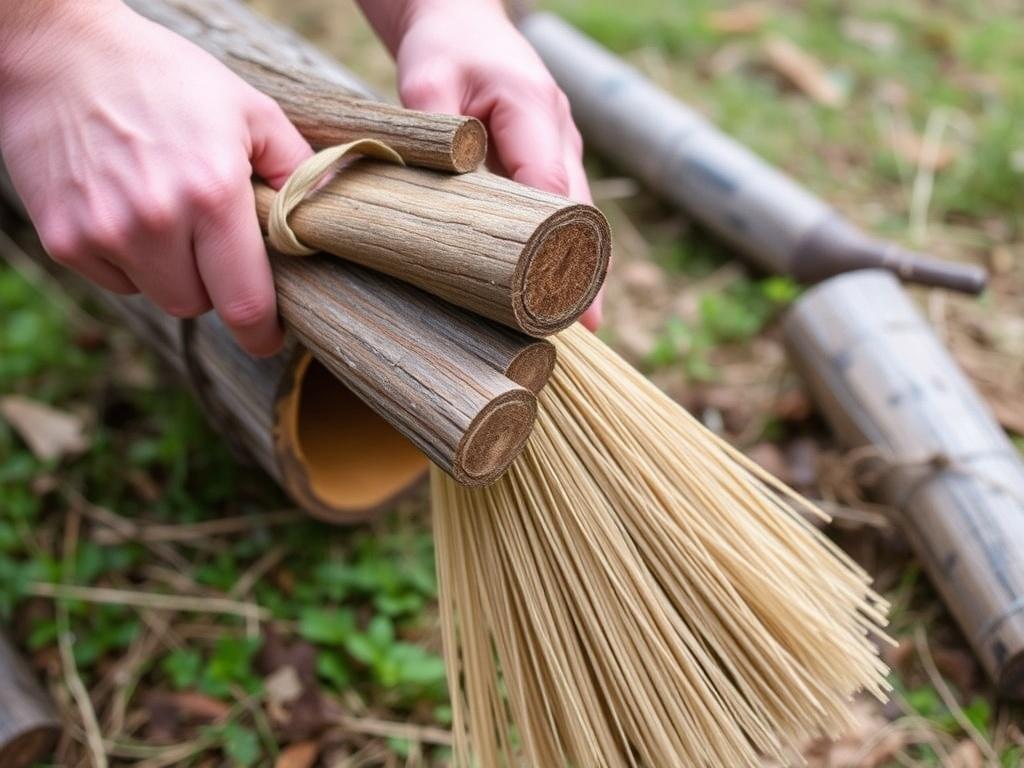
Not everyone has access to birch forests. Urban bathers or those in warmer climates can still make effective brooms. Consider using willow, certain fruit tree prunings (apple, pear), or cultivated eucalyptus. Even bundles of dried herbs like lavender and rosemary make small, aromatic sweepers for home saunas. For a modern twist, some makers combine natural branches with a lightweight wooden handle and leather wrapping for grip, keeping the outer surface entirely natural.
For people with allergies or sensitive skin, experiment with hypoallergenic materials like maple or alder and avoid resinous species. If you prefer a very long-lasting broom, consider a hybrid: a hardwood core for structure and replaceable heads made of seasonal twigs that you swap in and out.
Safety and health considerations
Essential oils and plant dust can affect people differently. Test a small patch of skin if you’re unsure about reactions. Eucalyptus, for example, can cause irritation in some people; citrusy or resinous species can provoke asthma in sensitive individuals. Keep a first-aid kit nearby and avoid using aromatic brooms on someone with known respiratory issues without medical advice.
When heating a broom, don’t expose it to open flames. Steam and hot water are the proper methods. Also be mindful of hygiene: brooms can harbor bacteria if kept wet and stored improperly. Air-dry completely between uses and replace the broom if it develops an unpleasant odor or sticky residue that doesn’t come out with rinsing.
Cultural notes and ritual context
The venik is steeped in ritual. In Russia, the birch broom is part tool and part ceremonial object used to stimulate circulation and symbolically drive away fatigue. In Finland, the vihta is a centerpiece of the summer sauna tradition. These practices vary regionally, so if you’re borrowing ideas from a culture that holds the venik in symbolic regard, approach it with respect and adapt techniques thoughtfully rather than wholesale imitation.
Making a broom can be an act of mindfulness: choosing living branches carefully, making measured cuts, and assembling a tool that will be part of intimate, restorative sessions. The craft connects you to wood, weather, and the slow rhythms of seasonality.
Cost, sustainability, and long-term perspective
Crafting your own broom is economical if you already have access to suitable wood, and it reduces waste compared with frequently discarding commercial alternatives. Think long-term: a well-made broom used occasionally and stored correctly may last months to a year. If you make brooms as gifts or for sale, factor in your time, permits for harvesting (if needed), and the value of your skill. Ethical sourcing — avoiding overharvest and choosing fallen or pruned branches when possible — keeps the practice sustainable and ensures you can keep making brooms year after year.
Quick reference: step-by-step checklist
- Choose species based on desired aroma and flexibility.
- Harvest in the appropriate season for your tree type.
- Make clean pruning cuts; avoid taking too much from one tree.
- Soak briefly if using fresh branches; dry slowly if making a long-term broom.
- Form a sturdy core, add outer twigs, and bind using breathable natural cord.
- Condition the broom before first use by steaming or soaking briefly.
- Store upside down in a dry, ventilated area and air-dry between uses.
- Repair minor damage promptly and replace the broom when it degrades.
Resources for further learning
Local botanical societies or traditional crafts groups often run workshops on venik making. Ethnobotanical texts and regional sauna guides describe traditional methods and rituals if you want deeper historical context. Online forums and video demonstrations can be instructive, but treat them as supplementary — hands-on practice and local ecological knowledge matter most.
Final tips from experienced makers
Collect a few test branches across different days and make small trial brooms so you can evaluate species behavior without committing to a full harvest. Store a small “reference” sample of each species in a labeled jar to recall aromas when planning mixed brooms. When binding, aim for balance: too loose, and the broom falls apart; too tight, and the twigs will snap or won’t release their scent in steam. Finally, respect the practice. A venik is at once a tool and a conversation with the trees that supplied it.
Conclusion
Making a proper bathhouse broom is a blend of practical skill, botanical knowledge, and a little artistry. Start by choosing wood for the qualities you want — aroma, flexibility, and leaf retention — and harvest with care and respect for the tree. Prepare branches promptly, decide whether fresh or dried suits your needs, and bind the broom so it’s secure but breathable. Store and care for the venik properly, repair gently when needed, and use it with attention to comfort and safety. With practice you’ll develop a feel for the right balance of materials and technique, and you’ll have in your hands a simple object that enhances steam, scent, and the quiet pleasure of a well-made ritual.

